Thursday, April 15, 2010

My last blog from Uganda

Ugandan Humour

This is my last blog from Uganda and to close my blogging in a lighter vein, here are some excerpts from a piece written by Pablo Kimuli, who loves to poke fun at Ugandans.

There are things that only Ugandans do that you won’t find elsewhere. We are the only people who bend all the rules, as long as we don’t break them. It’s the only country where you can pee by the roadside during broad day light and no one will point a finger at you, despite the strong warning “Tofuka wano, fine: Shs 10,000”, which loosely translated means you will be fined Shs 10,000 if caught red handed peeing here.

A bold man once stood at such a place with a Shs 10,000 note and held it up high, but nobody dared to ask for it. But then, Ugandans fear witchcraft. Having failed to stop people from peeing on his wall fence, my neighbor decided to write on his wall: “we collect urine for witchcraft.” Nobody dared to pee there thereafter.

Ugandans are the only people who refer to money as “balance” when they actually want “change.” A true Ugandan will always respond “I’m fine” even when they are admitted in hospital or have lost a loved one. We are fond of adding the phrase “well done” after greeting you, even when you haven’t done anything. When it comes to our roads, only drunken drivers drive straight. They only have two problems, starting and stopping the car.

Ugandans are very innovative. We refine empty mineral water bottles to pack fruit juice, empty insecticide tins to make tadoba (locally-made paraffin lamps), used tyres to make shoes (lugabire), and empty tins to hot-comb hair. We never put anything to waste.

We also have our own kind of English. We are the only people who end questions with the 5ws. E.g. “You said what?” “You are going where?” “It’s for who?” “He did it how?”

We are good at throwing birthday parties for five-year olds and 80% of the guests are above 40. Women marry hoping to change the men and the men hoping that the women won’t change. You hear a lady say, “when we get married, I’ll make sure he eats home every night.” Visit any fast food place after 9p.m. and you’ll see how many married men are rushing to finish their chips before heading home for burnt offerings.

Before marriage, the men enjoy walking behind their fiancées, but after two kids in the marriage, the guy is moving fast forward ahead of the wife! We are good at listening to a football commentary on radio and tell it like we watched it live on television. In restaurants, we always grab the opportunity to use tooth-picks even when we have only taken water. Ugandans, especially those from the central part of the country, are the only people who say, “kankomewo” which means “I’ll be back shortly” and never return.

The Pearl of Africa

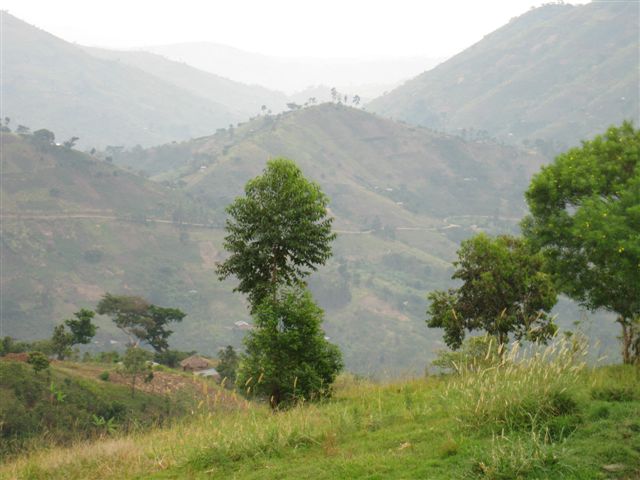
Winston Churchill was so enchanted by the natural beauty of Uganda that he called it the Pearl of Africa. These pictures reflect the stunning landscapes of this country.


Tricycles and White Canes

As part of our campaign to help some Ugandans with disabilities, we have now given away thirteen tricycles to mobility-impaired persons. Seven of these tricycles have been given to men and six to women.

Here they are:


  • Biira Gatrida (W)
  • Gabriel Agaba (M)
  • Bihanda John (M)
  • Baluku Fauza (M)
  • Biira Rebecca (W)
  • Bwalhuma Masiah (M)
  • Salim Masumbuko (M)
  • Mohindo Verone (W)
  • Josia Kinene (M)
  • Oliva Kiiza (W) (from Shirley Sauve)
  • Kabugho Yeresi (W)
  • Sefas Muhindo (M)
  • Valeria Kyakimwa (W)(from Suzanne Sauve)


Twenty white canes have arrived and the distribution has begun. But, the process has been slower because many vision-impaired people find it very difficult to arrive at the KADUPEDI office to collect their gifts without assistance especially those live in the villages. Office staff is arranging for them to pick up the canes or to deliver them to the recipients.

I have taken pictures of some recipients of tricycles and a couple of white canes. I will be glad to share these pictures with the donors on my return. But, my camera broke down accidentally and I have not been able to photograph every recipient.

Once again, I want to impress on Canadian friends who have donated these gifts how grateful the recipients have been. Everyone, without exception, kept repeating to me how the gift will change their life or open up a new chapter in their life, or allow them to be free, allow them to be independent, and so on and on. Thank you, folks! Your gifts are making a difference in some unfortunate people’s lives.

Final thought

This placement in Uganda has been an incredible experience in more ways than I can put in words. Personally and professionally, I have been enriched beyond my wildest expectations.I am now looking forward to the next ten days of traveling around Uganda and Rwanda with Neil who arrives here this evening. Then…back to Canada to enjoy my grandchildren (and the spring and the tulips and...)

Tuesday, March 30, 2010

About Kabakas and Kingdoms

TWO DIE AT KASUBI was the headline on the front page of the Daily Monitor on Saturday. The story began with the heading “Hundreds injured as thousands join Kabaka Mutebi in mourning burnt tombs”.

Kabaka Mutebi is the reigning King of the Buganda Kingdom in Uganda. The biggest domestic news on front pages of newspapers last ten days has been the fire at Kasubi, an area in Kampala, which destroyed tombs of four of his ancestors.

It may be hard to believe, but Kingdoms and Kings and Queens and Princes and Princesses and their palaces still exist and thrive in Uganda. As was the case in India, Uganda was comprised of many small independent territories before colonization. However, unlike in India where the power and priviledges of former stately Rajas and Nawabs were abolished within fifteen years of independence, in Uganda, Kabakas continue to occupy a special status and wield considerable influence.

Kingdoms in Uganda were ruled by tribal chiefs or wealthy landlords or rebellious leaders who established themselves as kings after seizing the territory. They levied taxes on the citizens in order to maintain their palaces, automobiles, armies and lavish life style. After colonizing Uganda, the British were quite happy to support these rulers albeit with only nominal power as long as they paid their dues to the Crown. In fact, the existence of many kingdoms perfectly suited the British divide and rule policy. The Empire was more secure that way.

When the British left Uganda in 1962, Buganda, the home of the Buganda tribe, was the largest and most powerful kingdom. It consisted of a large chunk of territory centrally located and included Kampala, the capital. The then ruler of Buganda, the father of the current Kabaka, was most reluctant to have his kingdom become part of Uganda, and, afraid of losing his territory, demanded to be under the British foreign office instead of an independent country. After intensive negotiations, an agreement was reached that the kingdom would enjoy self determination over its territory and affairs. In return, Buganda became part of Uganda. Today, Buganda has its own Parliament, a Prime Minster and a Cabinet and it retains all its authority and power. But, tensions between the Kingdom and Uganda’s government remain.

The tombs of four predecessors of the current Kabaka were erected over 125 year ago. Because of its unique architecture and beauty, Kasubi had become a national monument, a favourite tourist attraction and a sacred place for the Buganda people. The United Nations had even pronounced it as a World Heritage site. So, when the unexplained fire demolished the tombs on March 16, it immediately became a major national setback.

I learned about the existence of kingdoms in Uganda in very early days of my stay here because next door to our office is the office of the Rwenzururu Kingdom. The place is always busy with a whole bunch of people coming and going. They seem occupied everyday in meetings and high-level consultations. When asked about this, I was told that these were members of the cabinet and staff of the King. This kingdom formerly belonged to the Toro, a much larger and more powerful kingdom dominated by the Toro tribe. But, soon after independence from Britain in 1962, there was a falling out between the Toro Kabaka and Isaya Mukirinia, the leader of the Bakonzo tribe. He led a rebellion and seized part of the Toro territory in the Rwenzori mountains. The Toro Kabaka sent his soldiers to capture him, but he hid in the mountain range and was never caught. He established the seat of his kingdom in a palace high up in the hills. It was due to his campaign that Kasese received its status as a separate district in which the Bankonzo people live. He sent his young son, the current Rwenzururu king, to the U.S. out of fear for his life. Upon Isaya Mukirinia’s his death, his son was crowned as King.

With the existence of these kingdoms, I have been wondering about whether these are parallel governments, because, like Uganda’s national government, these kingdoms also have ministers with portfolios like health, transport, the environment, finance, etc. I was told that they are not duplicating or conflicting with the national government programs. Instead, they are now known as “Cultural Leaders” whose main function is to promote local culture and tradition and to ensure that their values and customs are not undermined by government policies and programs. What does this mean in practice? I have no idea. Regardless, these Kabakas enjoy a very special place in their communities and are influential opinion leaders. They are highly revered and recognized at public events. For example, today, the current King of Rwenzururu, His Royal Highness Omusinga Charles Wisely Iremangoma, was the Chief Guest at the launch of Oxfam-Uganda’s “We Can” campaign which is aimed at stopping domestic violence against women. Lots of people were looking forward to his presence with excitement and anticipation. And, a couple of weekends ago, we were to visit a village to meet a group of people with disabilities. But, two days before our trip, we were informed that the King had decided to visit that village the same day. So, of course, our trip had to be postponed. Kings take priority over us mortals.

To pay for their opulent life style, retinue of staff and maintenance of palaces, these royal families receive funds from the national government. The King of Rwenzururu receives 5 mill Shillings per month, an exorbitant amount by local standards. Other kingdoms also thrive on contributions from the government. This seems to have been a part of the deal that brought them in an independent Uganda in 1962.

A couple of weeks ago, Shaan sent me a CNN story, “African teen king lives dual life”. Incidentally, this young man is the king of the Toro Kingdom from which the father of the current Rwenzururu king broke away fifty years ago. For greater insights about the Kabakas, their Kingdoms and their unique status in Uganda, browse through the following link: African teen king lives dual life

Tricycles and White Canes

Our tricycle campaign has been very popular and now people come to this office urging me to get one for them or for someone they know. Fortunately, I have entrusted Peter the responsibility to decide who deserves a tricycle more than someone else. The first batch of ten tricycles has been completed. Three individuals picked up their vehicles today and five others will come in the next few days. Mobility is such a huge problem with some of them that they have to arrange with a family member or friend to bring them here. The woman you see in one of the pictures came with friends from a distance of about 60 kilometers. And, they had hard time arranging a transport with a rooftop rack to so she can take the tricycle back to her village.

Further offers of gifts have come from these friends in Canada:

Susan and George Nielson
Beth and Jean Noble
Cynthia and Gord Walker

At first, I wasn’t sure if the workshop would be able to make them before I leave in two weeks. But, I have been assured that additional vehicles will be ready in time. This is good news as it will allow us to contribute to the lives of three more individuals.

Along with tricycles, we have used the gift from one of my friends to buy collapsible white canes for persons with vision-impairment. These canes are as much in demand as tricycles. Many people currently use dried-up tree branches or wooden sticks to get around and find themselves in trouble while crossing the streets.


Three more recipients of tricycles

Monday, March 15, 2010

Uganda’s OVC

OVC is the acronym for orphans and other vulnerable children. Because of the staggering number of OVC, Uganda’s national government has a program to deal specifically with their issues.

There are over 2 million orphans in this country. Here, children become orphans because of deaths of one or both parents as a result of HIV/AIDS, tuberculosis and malaria, and violent conflicts the country has experienced in last fifty years. Abductions during conflicts and traffic accidents also account for a significant number of orphans.


Vulnerability, a much broader concept, is caused by many factors. Abject poverty, broken marriages, domestic violence, disabilities, malnutrition, unimaginable abuses, intellectual disabilities, psycho-sociological stress, alcoholism and unemployment are some of these factors. Thousands of children living on the street or living in camps in northern districts as a result of conflict and those in institutional or foster care in an unstable environment are also vulnerable.


A Polio Victim


Born with Club (twisted) Feet


Vulnerable Children with Disabilities


Children and Parents at a Village Meeting

Recently, I had an opportunity to talk to the coordinator of an organization that provides linkages and support to OVC. When I browsed through their files for specific cases, I was astounded to find a wide spectrum of OVC. I have selected excerpts from five letters in which writers were requesting support from this organization.

Letter from a woman 31-40 years of age:

I write to request you to link (name of the child) to anyone who can support his education and welfare. I am a poor woman caring for nine children and my husband sells everything I get from casual labour on alcohol. He moves from town to town, prison to prison. My land has been sold because of his wrong. I am very poor to look after my children.

An 18-year old young man wrote:

I am a vulnerable orphan and disabled aged 18.My father died of HIV/AIDS. My mother divorced even before the death of my father. I am disabled due to poliomyelitis which attacked me in my childhood. I am cared for by my grand (aged) mother (grandmother’s name) who carry me to and from school because I cannot walk or stand. I am in senior 3 at (name of school) two kms away. Kindly link me with any organization that can support my education and welfare.

A woman over 61 years wrote:
(name of the child) is the biological child of (names of parents) born 15/6/1993, a Ugandan, Omukongo by tribe. (name of child) lost his dear mother 20 May 2004 who acting as the mother at the same time as the father. Although the father is alive, he took a double orphan at this time he is living with his grandmother getting no help from the father who is polygamist with a number 50 (fifty) children. The grandmother is over sixty years is unable to work. So it is a duty of this child to do hard labour to get what eat.

A single mother wrote:
I would like to inform you that I the mother of (child’s name) was formerly abducted by the rebels in 1998 and delivered in the bush and encountered problems. I couldn’t get what to eat, where to sleep and in addition a lot of work was given to lift heavy lugages, walking long distances on an empty stomach. By God’s mercy I escaped after one year of suffering. (Child’s name) is now striving for life and in P.4 now at (name of school). I cannot manage to support her education since all my properties were stolen and her father being a casual labourer.

Letter from a woman 51-60 years old:
(Child’s name) is aged 13 years. She is a Ugandan Mukonzo. She sat her PLE (Primary Level Education) this year 2009 at (name of school) where by results are not yet out.

How (child’s name) came to stay with me; My late husband (name) died in 1995. After two years of his death, a certain woman came to me with a baby child of two years claiming that the child belonged to my late husband. The next day, the woman escaped leaving this child behind. She was no where to be seen. I reported the case to police, radio announcements in search of the woman. I had it rough to settle this child… I am keeping her that claim of the mother without any evidence… As a widow with no external assistance from the clan I regret that I may not be able to give her enough support for her further education since I have other orphans…

Gabriel’s Story

Gabriel’s story depicts one of the extreme cases of vulnerability. I could not believe my eyes when I first saw Gabriel. He was not on his feet. He was rolling on the dirty, filthy, bumpy streets of this town going over rocks and pot holes and all. With worn out wooden sandals in his hands he would prop himself up so his head wouldn’t get hurt. His knees were wrapped in layers of rags and he wore a torn shirt and ripped pants which probably had not been washed in ages. Most likely, he did not have a shower or a wash for months. He didn’t seem human. He showed no emotion. He was like an animal, worse than an animal. I found it very difficult and painful to watch him in such a miserable condition.

Gabriel was born in an extremely poor family with a severe case of cerebral palsy and he was unable to use his legs. His disability was a huge burden; so, his family abandoned him on the street. To survive, the only thing Gabriel could do was to roll himself. He would roll from door to door and shop to shop. Seeing him in such a pathetic position, some community members took pity on him. They would give him some food or money. But, that was never enough. Finally, an Imam of a nearby Mosque could not bear to see Gabriel in that state any longer and gave him shelter. But, the Imam himself had limited means. He could not do anything more for Gabriel let alone help him with immobility. So, Gabriel continued rolling on the streets and lived on generosity of others. That’s how he grew up.

When we launched the wheelchair/tricycle campaign, Gabriel was one of the first individuals I thought of. Peter contacted him, and last week, he came to pick up his vehicle. At first, he was dumb founded, but after a chat with Peter, he decided to give it a try, albeit hesitatingly. He had trouble getting on the tricycle because he had never been in any position other than horizontal. Sitting up in the tricycle was a huge and painful effort. But with encouragement from others, he managed. Just a few instructions and he started the tricycle using his strong arms. As he moved, his face lit up. That was the first time in his forty years that he was looking at the world from a different position. What a profound experience! Since everyone in Kasese knows Gabriel, people on the street were all watching him with intense curiosity and joy.


Gabriel trying out his precious gift

It has been a week since Gabriel picked up his tricycle. Peter tells me that some people from the neighbourhood have called to say how, like a kid with a new toy, Gabriel is riding the vehicle. They have never seen him so happy.

Thanks to all my Canadian friends for donating these life-altering gifts. You are indeed making a difference, a huge difference, in the lives of some unfortunate people like Gabriel and Biira Gatrida.

Wednesday, March 3, 2010

Uganda Notes

The Wheelchair/Tricycle Campaign

Thanks to the generosity of these people, we have met, and in fact, exceeded the target in just one week.

Hazel Baskin

Betty Bergin
Margie and Phil Bott

Ursula Chavez-Hibbard
John Knobel

Carol and Mike Lundy
Lorna McKenzie

Mary and Frank Mayda
Jody and Shaan Parekh

Shirley Sauvé
Suzanne Sauvé

Maria and Jaap Schouten
Maureen Sly

Marie and Mel Thompson

Folks, your gift will make a big difference in the life of a Ugandan with a disability. And Margie, I greatly appreciate your contribution to this effort. To all of you, my most sincere Vasinja (thanks)! Merci! Muchas gracius!


Biira Gatrida in Her New Tricycle

A gift from Margie and Phil Bott

Matooke, Muchomo and Grasshoppers

Matooke is a popular Ugandan dish that consists of steam-cooked green bananas. This is a featured item at most parties and group dinners. Ugandans don’t seem to have enough of it. Kaunga is another popular dish which is a mix of millet and cassava. For some locals, dinner is not complete without some Kaunga. A concoction of maize is cooked to make Posha. One other item that is popular among the Mizungus (white folks) is Muchomo, barbecued goat (or beef or chicken) meat. Muchomo with French fried make a nice meal for many ex pats.

A very special delicacy is called Ensenene. It consists of fried grasshoppers and it is served in Ugandan homes to their honoured guests. I haven’t been served this delicacy, not yet. And, if served, I don’t think I would sample a fried grasshopper.

Rice is a staple at meals. Goat is the most popular among meats followed by chicken. Fish is also available in most restaurants and so is beef although less frequently.

The influence of Indian cuisine is very strong. Many restaurants feature curries (goat, fish, beef and vegetable) and chapattis on their menus. A few higher-priced restaurants also feature Western dishes – pan cakes, sandwiches, salads, pizzas, fish and chips and spaghetti. But their version of these dishes can be quite different. Each time I order one of these items, I have a surprise.

Polygamy and human rights

If I want to marry more than one woman and if the women are happy marrying me, why should anyone object? It’s none of their business. It is a violation of a man’s human rights to insist that he can only marry one woman; and, human rights of women are also breached if they cannot marry a man with more than one wife. They are deprived of their right to freely choose whomever they want to marry.

I have paraphrased above the vigorous argument my driver in Kampala put forward in defending polygamy which is legal in Uganda. For him, the notion of monogamy did not make sense. And, he did not defend polygamy on religious grounds (i.e. Islam allowing a man to marry up to four women). For him, it was a matter of human right. When I asked him whether women have a reciprocal right, he promptly replied that Ugandan women would not want to marry more than one man anyway.

I know of a few men who have more than one wife. One is an old story-teller living in the mountains in a small hut. He has five women (they call them women, not wives) and several children. He is very poor; yet, he seemed to be doing fine living with five women. On Valentine’s Day, the paper contained a piece with the headline, “I love all my wives” and the author was the Chair of Uganda’s Election Commission. It didn’t indicate how many women he had married but it was clear that he had married several times.

What is the maximum number of women a man can marry? I don’t have the answer. But, a few weeks ago, one of the national newspapers featured a full-page story of this very wealthy and huge Ugandan man. The article also carried a picture of his entire clan - twenty one wives and seventy children. Imagine that!

Uganda Time

A few weeks ago, we had a scheduled meeting with the District Service Commissioner who is the head of the local government machinery. This was the first meeting of its kind where our board was to meet him and his staff in the hope of initiating an ongoing dialogue. KDP had prepared for it for days and a couple of people from KDP’s partner organizations had travelled for this meeting all the way from Kampala. However, it was only after 15-17 of us reached the Commissioner’s office that one of his minions told us that the meeting would have to be delayed - by one full day. Even though everyone here has a mobile phone, no one from the Commissioner’s office bothered informing us about the delay.

This is perhaps an extreme example, but, I have yet to attend a meeting, whether with our own executive or with government officials or elsewhere, that has started on time or within a few minutes. And, when a meeting is delayed, it could be for hours, not minutes. What I find amazing is that Ugandans don’t seem to be bothered by this kind of delays. They accept it as part of their way of life. But, my patience is tested daily.

Stapled newspapers and the soccer craze

The first time I bought a newspaper in Kasese, I tore the first page when I tried turning it. That’s because vendors staple their newspapers. Apparently, some people go to the newspaper stall, grab and read a paper there and return it without buying it. So, to prevent free-loaders from reading the paper, they put at least two and sometimes more staples. Not a bad idea, eh?

There are two major national newspapers. They are both in a tabloid format, and in both, domestic news take up a huge chunk of the space. Uganda’s national election is only a year from now. So, political news and stories dominate the news. Major international news like the disaster in Haiti and Chile’s earthquake get lost somewhere in the middle pages.

Aside from domestic news, each paper devotes four to six full pages to soccer every day. Ugandans are crazy about soccer. The World Cup of soccer is scheduled in South Africa and it is only 100 days from today; so, the countdown is on. There are stories of teams, their owners, managers, players and juicy gossips. Sports pages hardly carry news of other sports with the exception of a couple of items like Tiger Woods’ mea culpa and an Indian cricketer’s record-breaking 200 runs in a one-day match. The same is true of local TV stations which continuously show soccer, soccer and more soccer. But, the Winter Olympics, an international sporting event, was completely ignored.

Sundays are special

Sunday is a very special day here. It is reserved for one and only one activity – visiting the Church. For most of the residents of this town, their Sunday is not complete without a visit to the Church. Walking around Kasese and neighbouring communities on a Sunday morning, you can see groups of people, older men in dark suits and ties and women in long dresses and head scarves going to or coming out of a Church. Even for younger Ugandans, Sunday Church service is a must. This is such an important part of their weekly routine that they cannot fathom someone like me, for example, not going to the Church.

However, Church’s influence goes well beyond the Sunday service. Every business meeting and public function, except a one-on-one visit, invariably begins with a prayer, a Christian prayer, asking for spiritual guidance and divine wisdom. Sometimes, there is also a prayer of thanks at the end.

Beauty is in the gap between the teeth

An article published in a newspaper around Valentine’s Day caught my attention. It described features that denote beauty for traditional Ugandan women. Among this country’s many tribes, physical standards of beauty vary. However, a gap in the front teeth of a woman is considered a mark of beauty in a number of tribal groups. In some communities the gap may be in the upper jaw while in others, the preference is for a gap in the lower jaw. Regardless, to be considered beautiful, a traditional woman must have a gap in the teeth.

To meet this criterion, some women have one or more of their front teeth knocked out. The article noted that the practice of removing women’s teeth can be traced back to the meningitis outbreak in the Karamoja region. Since the disease locked the victims’ jaws, their teeth were taken out to administer aloe vera and other herbs. Thus began the practice which later became a symbol of beauty. In one tribe, traditional Lugabara women knock six teeth out of their lower jaw in order to look beautiful. Different strokes…

Music and dance

There are 56 ethnic groups in Uganda and over 40 major languages and dozens of dialects. On a recent field visit, I was in a community about 20 km from here and these people spoke a different language. Even the young woman who was my interpreter had difficult time understanding them. The existence of so many tribes and languages accounts for the great diversity in music, dance and theatre. The picture shows a traditional instrument of the Bakonzo people. It is made of wooden planks placed on a couple of tree stumps and people hit the planks with small sticks to produce music to which women wearing grass skirts dance. Unfortunately, I have not been able to send you the video. But, enjoy the picture.


Bakonzo tribe’s instrument called Embara


Monday, February 22, 2010

Make a difference

In my blog of January 27th (KADUPEDI - The people I work with), I had written about some of the most amazing people I have met here. Biiara Gatrida was one of them. She was born with polio and both her legs are non-functional. She wears thongs on her hands to use them as her feet and drags herself all over. When I met her, at first it was painful to watch her straining at each step. At the same time, I was struck by how well she could manage herself, as if her disability did not exist. She has boundless perseverance and determination.

Despite her condition, she took courses on weaving mats and baskets. She now makes and sells these hand-made articles to support herself. When I asked her about her biggest wish, she instantly replied that she was desperately yearning to acquire a wheel chair. If she had her own vehicle, she explained, she could herself pick up the raw material for her weaving business. When others help her, she cannot always rely on them. And, she wants to be independent. She also wants to start giving lessons in weaving to others in her situation.

Reading her story on the blog, my dear friends, Margie and Phil Bott, were moved and they immediately fired off an e-mail to me offering to buy a wheel chair for Biiara Gatrida. What a heart-warming gesture! And, they didn’t even inquire about the cost. Very special people they are, Margie and Phil.

In talking to Baluku Peter at the office, he explained that because of road and traffic conditions, here, a tricycle is preferred by those who are not mobile. It has a wheel in the front. Instead of paddles, the rider uses the handles that put the chain in motion to move and steer. After a few inquiries, we connected with a local company that makes these tricycles. Its first product is shown in the picture.


To build on the gesture of Margie and Phil, I have decided to acquire more of these wheel chairs/tricycles. My target is to get a minimum of ten of these vehicles before I leave Uganda around 10 April. Since writing that blog, I have met dozens of people - children, women and men, who, because of polio, cerebral palsy, epilepsy, land mines, accidents or injuries suffered during Uganda’s bloody insurgencies, are not able to move. And, being extremely poor, no one, including family members can help them with mobility.

The challenge is overwhelming and giving these vehicles to ten people will be only like a drop in the ocean. Nevertheless, there are many small ways in which we in rich countries can help out these poorest of the poor, people with disabilities. Giving of these wheel chairs/tricycles will be one such tiny step.

If you are moved, motivated or inspired, I would welcome your participation in this project. It will cost you not more than $200. And, you will certainly make a huge difference in the life of someone less fortunate. They will forever be grateful to you.

For contributing to this effort or any questions, please send me an e-mail at:
tda1@rogers.com


Monday, February 15, 2010

A Ugandan Family

Robert is a 34-year old Ugandan. I met him at an Internet Café a few weeks ago. He is a medical laboratory technician working in a Health Centre in Kasese. We meet once or twice a week, usually on Sundays.

Yesterday, he invited me to visit his home in a nearby village located in the Rwenzori mountains. Robert has a government subsidized apartment in Kasese, but he visits his home every weekend to be with his mother and siblings and more importantly, to help them “dig”, i.e. cultivate land. We started in the morning around 9. Normally, Robert travels to and from his village by a boda (motorbike taxi), but, today he had made special arrangement for a car taxi. Once we left the main highway, the road to his village was, like most other roads in Uganda, unpaved with hundreds of thousands of rocks and pot holes every few meters.

Maliba Town

We reached a town called Maliba (pronounced Maliva) around 10:15. It is located at the bottom of one of the mountain peaks in a scenic setting. At one end of the town is a half-completed structure where Robert’s family members and neighbours were waiting for us – his mother, his two brothers, two sisters, cousins and several neighbours. They exuded genuine joy and warmth. They were pleased to see me and their excitement was palpable. More than anyone else, his mother was beaming with happiness. Her name is Kabugho Rakeri. I soon learned the reason for their excitement - I was the first foreigner to visit them.


Family and neighbours in Maliba

Robert’s father died ten years ago of Asthma. Robert is the second oldest among his five brothers and two sisters; so, he introduces himself as Bwambale (second born) Robert. His older brother lives in Kampala and the rest of the siblings are still studying. Robert is the main breadwinner and the half-completed structure is a Health Centre he is building for his village. There is none at present.

Standing by this building, Robert pointed out his village, Mpumuro, located way up the hill. That’s where his mother lives and that’s where Robert and his siblings were born. His family members climbed up the steep hill on foot without much effort, but to make it easy on me, Robert called a couple of bodas. Yes, I rode on a motorbike without any safety gear on an uphill path with all kinds of hazards. Here, you have no choice or time to worry about safety.

Mpumuro Village

The village consists of scattered homes besides parcels of hilly terrain. Robert’s family owns about 5 acres. They grow coffee, cassava, banana, maize, Irish potatoes (Ugandan name for potatoes), sweet potatoes and groundnuts (peanuts). But, farming contributes only marginally to family’s income.

There are three small homes made of mud and wooden planks on their land – one serves as a common accommodation for the siblings, one consists of the kitchen with a wood-burning stove, and, one is his mother’s quarters. They also have a goat with two babies as well as half a dozen chickens. Water supply is a huge problem. They have to fetch water from a nearby river and that involves carrying pots full of water up and down the hill.


Robert (in the middle) and his brothers

As soon as we arrived, neighbours and friends and relatives started trickling in to greet and meet me. Robert kept repeating how special an occasion it was that a foreigner had visited them. They were glad to hear that on my part, I considered it an honour to have visited their family. They also giggled at my attempts to speak a few words in their language. Several half-naked kids kept staring at me from the doorway. They couldn’t contain excitement when I took their pictures. I also met an elderly man who is the guardian for Robert and his siblings. In this community, when a man dies, someone, an elderly family friend or a relative, is entrusted with the responsibility of mentoring and guiding the young ones. Robert explained that whenever any of the siblings and even their mother has an issue to be resolved, they turn to him for advice. He is like an elder in some of our Aboriginal communities in Canada.

When we settled down in their hut, Robert’s mother was keen on serving me some home-cooked food following their customary practice. Robert told me that she was anxious to have a goat slaughtered and cook it for me. But, he had advised her previously that I prefer vegetarian diet. Ugandans are so accustomed to meats, they cannot fathom a strictly vegetarian diet. She was disappointed, but, as a welcoming gesture, she gave me a shirt as a gift.

Tribal Traditions

I was not able to communicate directly with his mother and others because they don’t speak English and I don’t speak Lhukonzo, their language. So, Robert acted as interpreter to help with the conversation. I learned that Robert’s family is from the Bakonzo tribe. According to their tradition, the father looks for the bride for his son, similar to the tradition in rural India. When Robert’s father was of marrying age, Robert’s grandfather started looking for a woman for him. He reached out to a neighbouring community and found the bride for Robert’s father. I doubt if Robert is going to follow this tradition. He already has a girl friend, Mary, a lovely woman whom I have met.


I had no idea that these people also have a dowry system. But, the roles are reversed. Instead of the bride’s folks giving the groom a dowry as in India, it is the groom’s family which gives out a dowry to the bride’s family. Often, the dowry consists of goats. Goats are greatly prized and goat meat is the most popular meat.

To give children some sense of their roots, when a child is christened, his/her formal name begins with the name of the grandfather on father’s side. Robert’s formal name is Nyamongera (grandfather’s name) Robert. All his siblings’ names similarly begin with the name of their grandfather. Yet, they don’t use their formal names in everyday use. Thus, Robert is called Bwambale (second born) Robert.

Robert’s grandfather on mother’s side died a few weeks ago at the age of 115, an amazing record in this country where life expectancy is only 52 years. He had seven women (the word they use around here for wife), and an unknown number of children. Polygamy is legal in Uganda. His grandfather on father’s side had three women and seven children. However, Robert’s father had only one woman, Kabugho Rakeri, Robert’s mother.


Outside Robert’s Home

Returning from the village, no other transport was available. Our only choice was to walk down the mountain, about 3 km to the base. The narrow path was full of twists and turns and a steep incline that sometimes was almost vertical. To exacerbate the problem, I wore sandals, not walking shoes; and the light drizzle had made the path extremely slippery in places. Robert goes up and down this path every week, knows every inch of the way and had no problem. Thanks to considerable support from him, I managed, except for a slip. That climb was one of the most stressful and exhausting I have experienced.

At the base, Robert had already arranged for us to have lunch in an excellent restaurant. The beer tasted wonderful even though it was not as cold as I would have liked. And, the vegetable curry was also good. That lunch culminated an unforgettable day. The visit to Robert’s family was an awesome learning experience, the highlight of my stay in Uganda. I got some valuable glimpses in the culture, traditions and practices of rural folks in this country. I hope other ex pats in Uganda will have a similar opportunity.


Robert’s mother

Thursday, February 4, 2010

Disabilities in Uganda

In the short time that I have been here, I am beginning to realize how overwhelming the issues affecting the disabled community in Uganda are. People with disabilities (PWDs) are among the poorest and rampant poverty contributes greatly to disability. It’s a vicious circle.

Using the World Health Organization’s world-wide estimate of 10% of population as a benchmark, there are 3.2 mill people with a disability in the country. This is perhaps an underestimate.


Causes of Disabilities

A number of factors have led to large-scale disabilities. Following independence from Britain in 1962, Uganda was torn apart by ethnic and tribal conflicts. Then came Idi Amin’s reign of terror from 1970 to 79 during which thousands of people were killed or severely injured. Another civil war broke out in 1982 under the banner of National Alliance for Liberation of Uganda (NALU). That uprising was squashed in 1986 by the National Resistance Movement (NRM) which has been the ruling party since. However, violent agitation occurred again between 1996 and 2002, led by the Alliance for Democratic Front (ADF).

These civil wars have left thousands of Ugandans maimed, homeless and orphans. In addition, 57 areas, many in the Kasese district, have been affected by land mines planted during the conflicts adding large numbers of people to the ranks of PWDs.

Many children are born with a disability: hydro cephalous (a big head), club feet (twisted feet), deafness, blindness, speech impediments, cerebral palsy, polio, etc. When a woman gives birth to a disabled baby, chances are that her husband/partner will leave her or react violently towards her accusing her of bringing such a baby in the family as if he may have had absolutely nothing do with the disability.

Furthermore, abduction of children has resulted in thousands of orphans. Between 1990 and 2001 alone, an estimated 20,000 children were abducted in conflict areas, and only 5,000 were returned to their communities. These children suffer from psychological problems and high-risk behaviours. Thousands of more children have been rendered orphans and vulnerable due to malnutrition, limited access to food and medical care, difficulties in eating balanced diets, and, stunted growth. The issues of these young Ugandans are of so monumental that the national government has established a special program for orphans and vulnerable children (OVC)


Polio Victims

Chronic diseases like malaria, cholera and meningitis add to the rolls of the disabled as do accidents. Ugandan diet, women’s difficult labour at child-birth, and, poor health care are other contributing factors. And, preference for large families adds to the misery.

HIV/AIDS

Overall, Uganda has fared better than some other African countries. The prevalence of HIV among Ugandans 15-49 years varies from as low as 2.3% in the northwest to a high of 8.6% in the central region where Kampala is the major centre. In the western region which includes Kasese, the incidence is 6.9%. However, in the Kasese district the prevalence is 11.5% and it has been rising. This district is on the border with DRC and there is very heavy traffic carrying goods back and forth. Drivers of these lorries are known as “geographical bachelors”, i.e. married while at home, but bachelors on the road. There are also a couple of big industries, cobalt and cement, which attract workers, mostly men, from the villages. In these circumstances, HIV keeps spreading.

There is no information on HIV among PWDs, but it is suspected that the figure will be much higher because PWDs are more susceptible to the virus. They tend to readily succumb to the human need. Most of them are isolated, poor and lonely, and extremely vulnerable. With the slightest hint of love and attention, even from complete strangers, they submit. This is particularly true of disabled women shunned by partners and family members.

Many children inherit HIV from their mothers. Numbers of HIV-positive children of mothers carrying the same virus is not known. But, a recent newspaper item suggested that although the situation has improved, it could still be as high as one in six children.

A lack of HIV/AIDS education is another factor. There are community workers who strive to raise awareness and urge people to undergo testing. But, their reach is very limited and sporadic. Adding to the difficulty is non-availability of educational material in Braille and sign language teachers.

Since HIV/AIDS’ victims are mostly in the income-earning age bracket, the impact on families is devastating. The care and medication for an HIV/AIDS patient takes a heavy financial toll and the responsibility for looking after the family is often thrust upon children who lack maturity, knowledge and skills. As well, psychologically, these children are under heavy stress as they watch their sick and suffering parents day after day until their death.

Social Attitude

Above all, social attitude towards disabilities inhibits adequate care and rehabilitation of PWDs. A disability is considered a stigma or a curse, something a disabled person deserved, something to be ashamed of. Some mothers are so traumatized by a disabled child, they hide them lest others might see them. Community members tend to avoid PWDs.


KDP delegation meeting with District Commissioner (squatted, 2nd left)

Social attitude towards disability and the disabled has led to widespread systemic bias against PWDs. They cannot attend schools most of which are inaccessible and do not have teachers to teach sign language or Braille or meet other special needs. Many hospitals are not easily accessible either and hospital beds and latrines are not suited to meet the needs of PWDs. Hospital staff members also do not have the skills to interact with PWDs. As well, there are cases of abuse of PWDs by health care workers themselves. In the work place, the chances of securing employment are virtually non-existent for PWDs. There is a national law, The Persons with Disabilities Act 2006. It provides for equal access to employment for PWDs. But, the law is only like a statement of good intentions. Its implementation and monitoring leave lots to be desired.

The consequence of these factors is that PWDs are looked upon as useless. Even many disabled individuals see themselves as good-for-nothing. And, in the long list of government priorities and limited resources, issues of PWDs seem to fall by the way side.

This is the context in which KDP and other similar organizations serving PWDs are carrying on their work. Their task is huge and the challenge is immense.


Women with disabilities at a tailoring class